The IMF has approved the disbursement of more than $1.1bn to Pakistan, reviving a stalled $7bn assistance package expected to help stave off default despite a severe economic crunch and devastating floods.
The IMF’s board in Washington authorised the expenditure after Prime Minister Shehbaz Sharif’s government introduced austerity measures, including sharply increasing domestic fuel prices.
“The formal resumption of an IMF program is a major step forward in our efforts to put Pakistan’s economy back on track,” Sharif wrote on Twitter.
Antoinette Sayeh, deputy managing director and acting chair of the IMF’s executive board, said maintaining the reform measures would be crucial.
“Steadfast implementation of corrective policies and reforms remain essential to regain macroeconomic stability, address imbalances and lay the foundation for inclusive and sustainable growth,” she said, including strengthening governance at state-owned enterprises.
But the unpopular austerity measures have proved politically perilous at a tumultuous time for the country of 220mn. Inflation has soared, with a basket of “sensitive” food and fuel prices last week rising 45 per cent from a year earlier. Flooding has killed more than 1,000, affected more than 30mn people and destroyed rice and cotton crops.
Sharif’s arch-rival Imran Khan, who was ousted as prime minister in April as the economic crisis was brewing, has surged in popularity and his Pakistan Tehreek-e-Insaf party has held raucous rallies pushing for immediate elections.

The government hopes that financial assistance from the IMF, as well as China and Saudi Arabia, will buy time for inflation to ease ahead of polls, which must be held by the second half of next year.
“I could see why people would not be so enthusiastic but my take is this: If I’d let this country default — two or three months ago it would have defaulted — things would have been much worse,” Miftah Ismail, Pakistan’s finance minister, told the Financial Times in an interview.
The government can now “show the people of Pakistan that we are competent, that we know how to deliver,” he said, speaking before the disbursement had been finalised. “People will understand . . . that PTI had brought us to the brink of default and we saved them. But certainly, the economy has to pick up.”
Pakistan is one of a number of countries facing acute economic distress following the surge in global prices after the Covid-19 pandemic and Russia’s invasion of Ukraine. Among South Asia countries, Sri Lanka defaulted in May and Bangladesh and Nepal are struggling.
Pakistan’s IMF programme, one of a dozen since the 1980s, was negotiated in 2019 under Khan, but stalled multiple times as his government resisted demands to implement unpopular spending cuts. After Monday’s announcement, the IMF is set to provide about $4bn to Pakistan over the coming year.
But Islamabad’s external debt obligations have surged, with repayments for the financial year rising to $24bn from about $14bn two years ago, according to research firm Macro Economic Insights.
Pakistani officials also expect Saudi Arabia to renew a $3bn central bank deposit, and Qatar and the UAE to invest about $3bn and $1bn, respectively, though analysts warned that the timing of those outlays remained unclear.
The lending pledges have done little to stem frustration among Pakistanis. “Life has become extremely expensive,” said Osama Abbassi, a cook in Islamabad and father of six. “I cook food for others which I can just not afford for my family.”
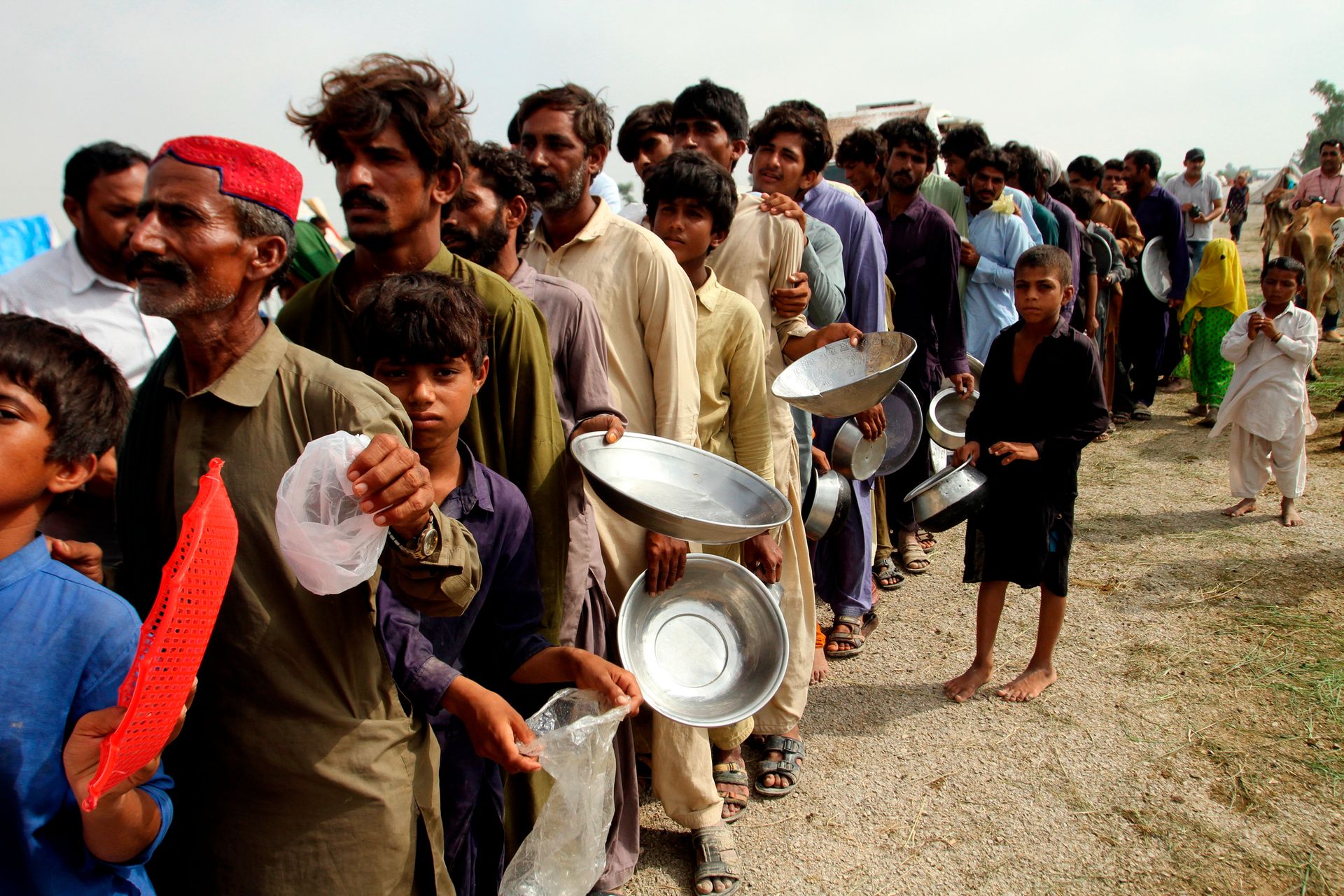
The worst floods in decades have complicated the economic outlook, with hundreds of thousands of people in Sindh, Balochistan and Khyber Pakhtunkhwa, three of Pakistan’s four provinces, displaced because of the torrential rain.
Akram Khan fled his village in Khyber Pakhtunkhwa for Islamabad with his family last week. “Overnight, rain deluged our entire home,” he said. “We barely escaped.”
Authorities said the floods could hurt the country’s ability to bounce back, and have called for international aid, warning that the damage to crops could stoke food inflation. “This is going to really hurt us,” Ismail said.
Investors also remain wary. While sovereign bonds have rebounded from lows since Sharif’s government announced a preliminary IMF agreement last month, equities and the rupee remain volatile.
Sakib Sherani, head of Macro Economic Insights, argued that despite the IMF deal, rising debt obligations meant Pakistan may yet be forced into debt reprofiling with the IMF. “We have a hump coming up for the next few years in our external debt repayments,” he said.
Sharif’s government wants time for its economic strategy to deliver results before calling elections, but critics said that prolonging the political uncertainty would hamper the recovery.
In opposition, Khan has mobilised his base with mass rallies that have inflamed political tensions. The former prime minister is on bail after police this month charged him with terrorism-related offences for allegedly threatening officials in one of his speeches.
“Economic stability in Pakistan is now linked with political stability . . . If I were an investor in this country, I would think twice”, said Ashfaque Hasan Khan, a former member of the PTI government’s economic advisory council. “The only solution is a free, fair and transparent election as soon as possible.”
Sharif’s government has argued that elections would serve only to further destabilise the recovery. “Give us a few months,” Ismail said. “Things will get better, but I understand they’re very difficult right now.”
But for victims of the flooding, many of whom have lost everything, there is little to look forward to. Khan showed a photo on his phone of a party two weeks ago at his no- abandoned house to mark the birth of his son. That would be, he said through tears, “our last celebration ever”.